CATEGORY:
Web Application
CLIENT:
General Assembly
YEAR:
2025
DURATION:
2 Weeks
about.
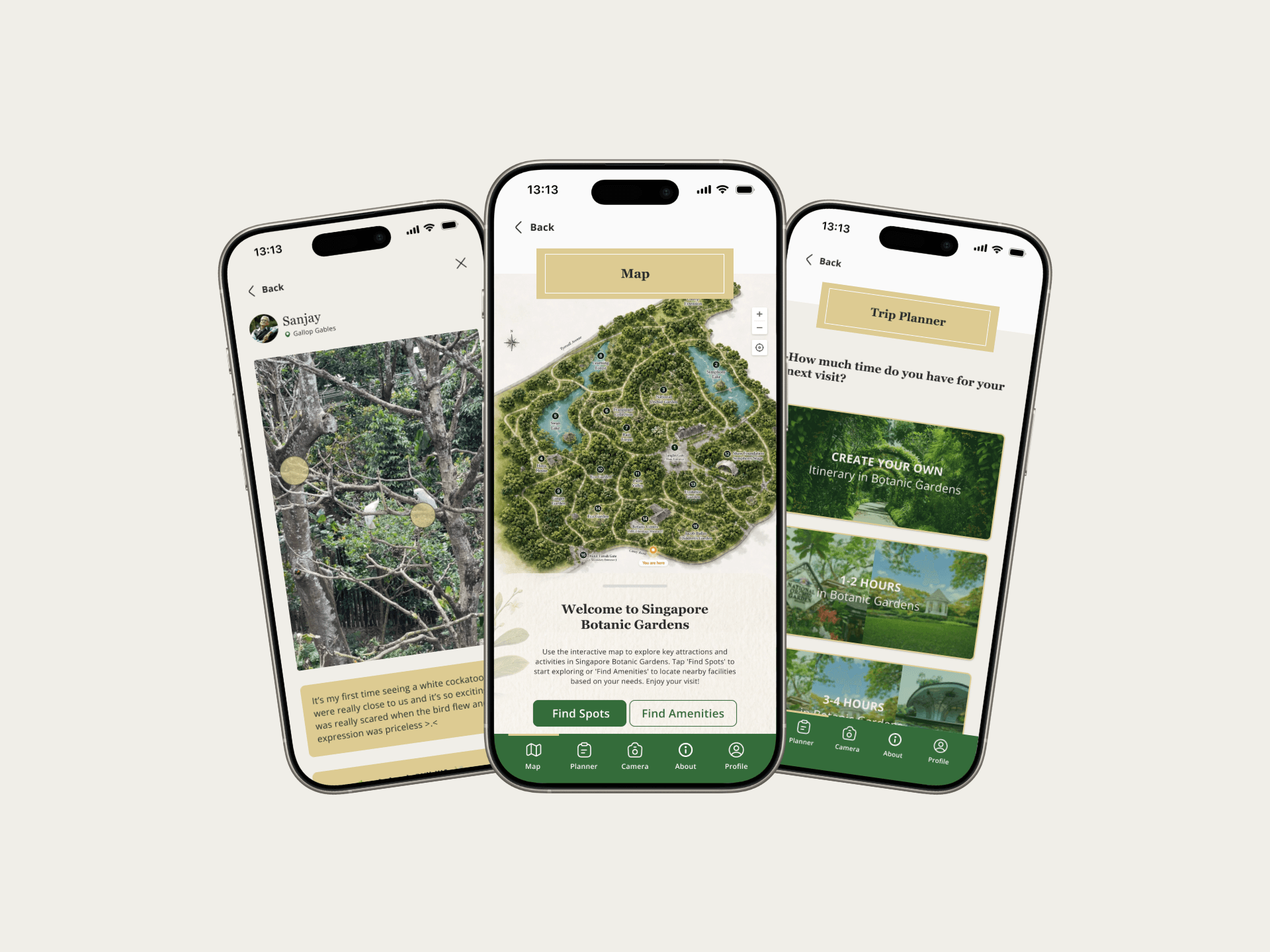
Singapore Botanic Gardens welcomes 4.5 million visitors annually, yet most follow identical routes to popular attractions, missing most of the 82 hectare UNESCO World Heritage Site. Working with two other UX designers, we designed a discovery platform that helps visitors explore based on their interests, not just what's familiar.
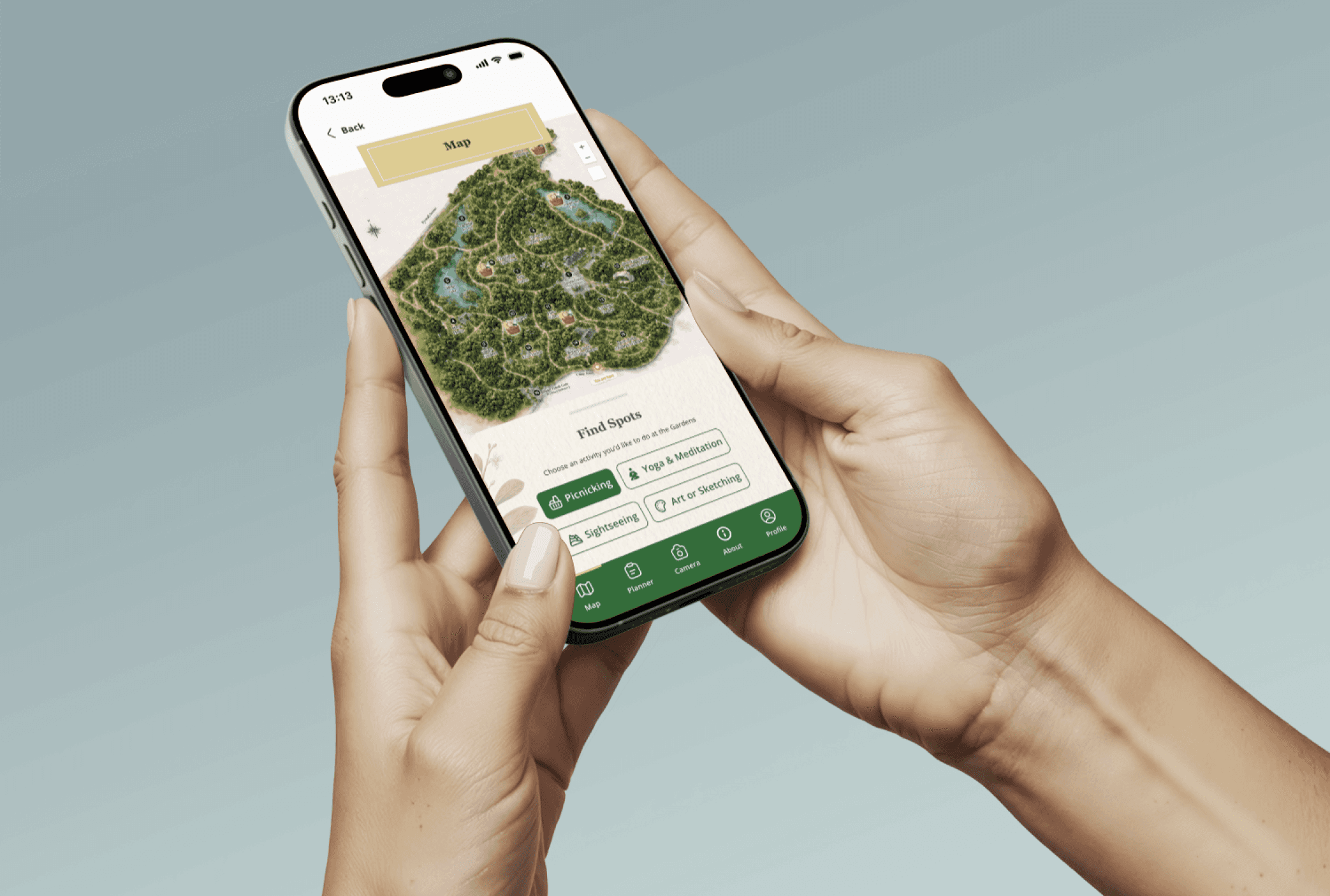
I owned the Interactive Discovery Map feature, combining activity-based discovery (find spots for picnicking, photography, etc.) with contextual wayfinding. My teammates designed the educational journal and itinerary planner.
I led the user research that uncovered critical insights that directly shaped our solution. The real problem wasn't navigation but personalized discovery. Visitors gravitated toward familiar attractions, lacking a way to discover alternatives that matched their interests.
I also took initiative to proactively engage the Gardens management (Festivals, Events and Visitor Management team) and present all three concepts. They validated our direction, sharing that the team was planning similar initiatives. They expressed interest in piloting our features, particularly the Itinerary Planner.
challenge.
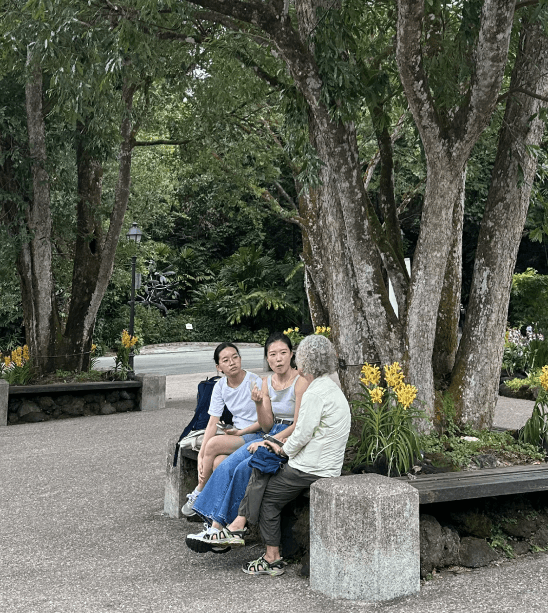
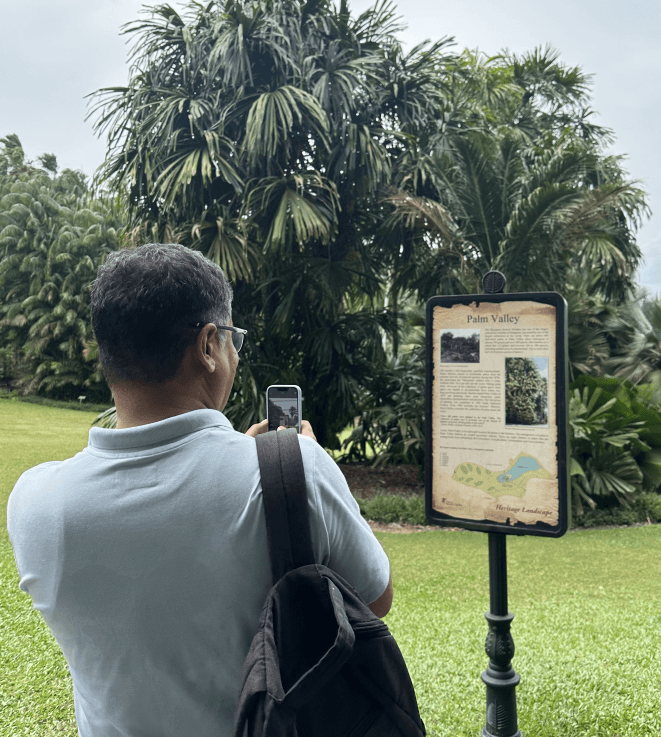
We initially assumed visitors struggled with navigation, but research revealed most found it easy to get around and genuinely enjoyed their visits.
Our research, including interviews with 12 visitors, field observations, and desktop research, revealed four key insights:
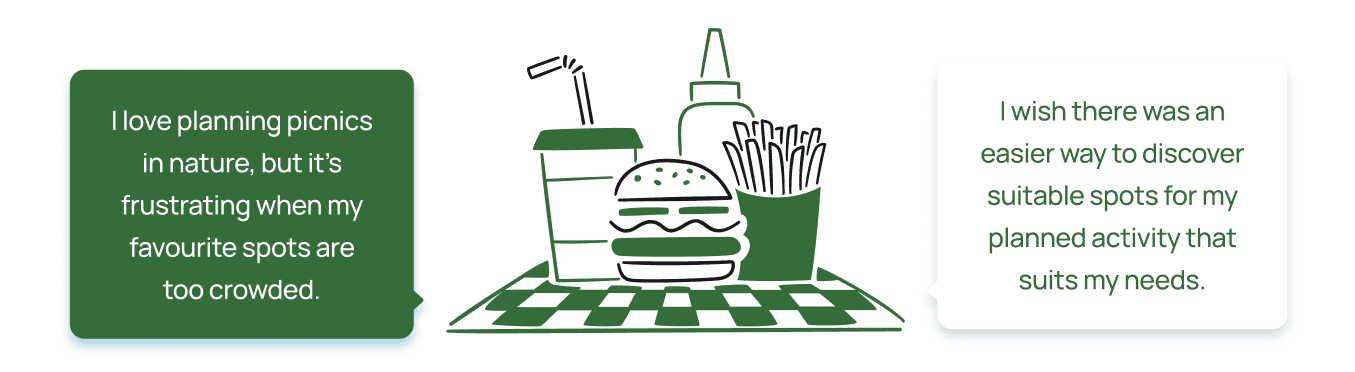
Planning friction: Popular activity spots are crowded during peak periods, leaving visitors to hunt for alternatives while ensuring essential amenities remain accessible.
Device-light behavior: Visitors primarily used phones for photos and occasional directions, while focusing on enjoying the natural beauty of the Gardens.

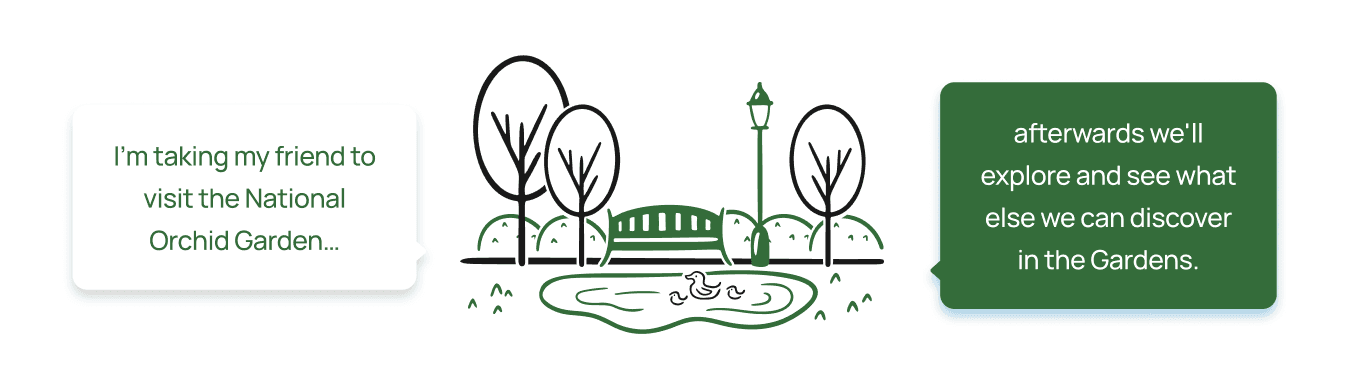
Repetitive journeys: Most visitors followed identical routes to must-see attractions like the National Orchid Garden, often missing hidden gems and unique experiences throughout the broader Gardens.
This shifted our perspective and reframed the problem:
How might we elevate rather than simplify the visitor experience?
solution.
The insights revealed three key opportunity areas that shaped our solution approach: Discovery, Planning, and Education.
Interactive Discovery Map
A dynamic map with personalized suggestions and real-time crowd updates to help visitors explore beyond the usual paths.

Educational Photo Journal
A feature that transforms visitor-taken photos into engaging learning moments about the plants and animals they encounter.
 |  |
Personalized Itinerary Planner
A smart planner that tailors routes based on group size, crowd conditions, time available, and accessibility needs.

result.
We conducted usability tests with 10 users and iterated based on their feedback.
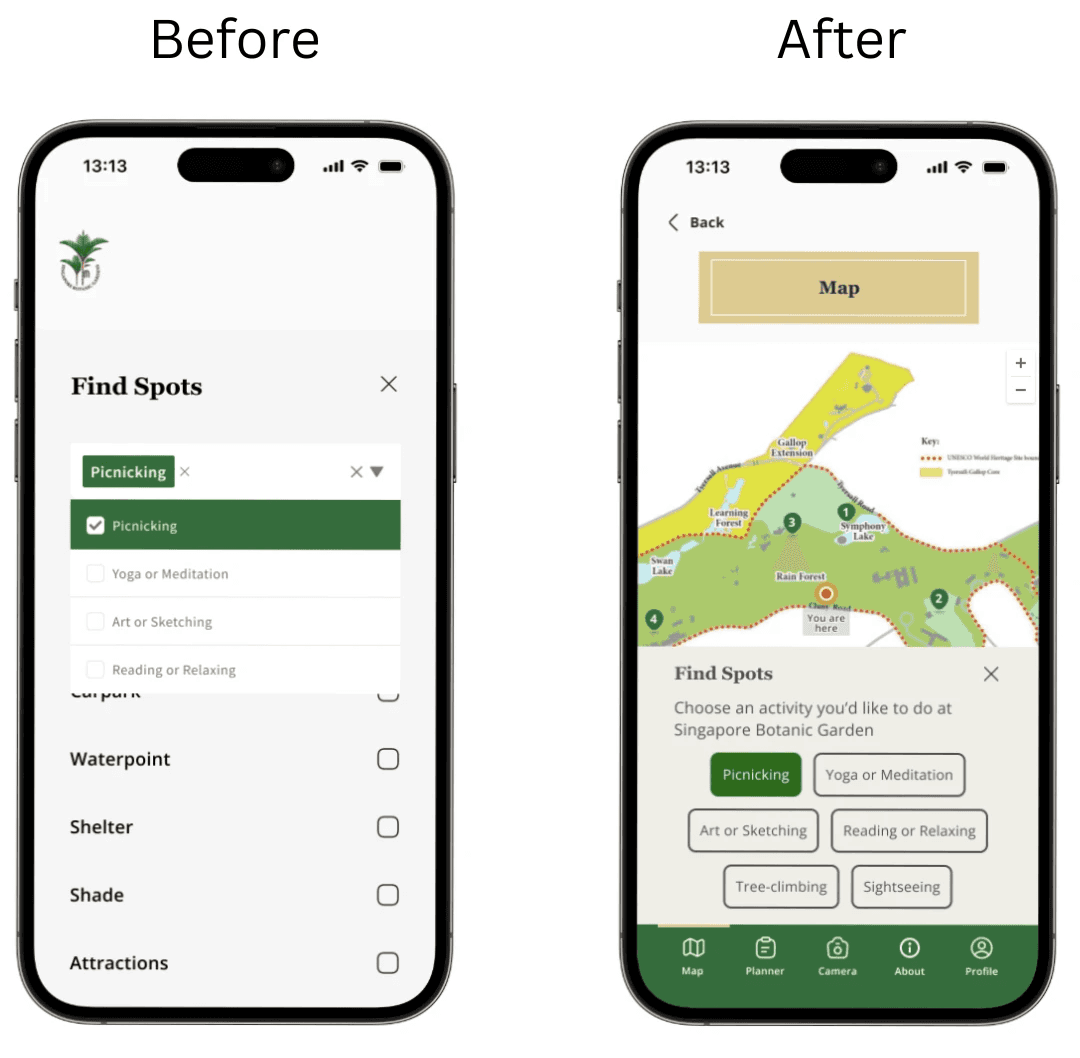
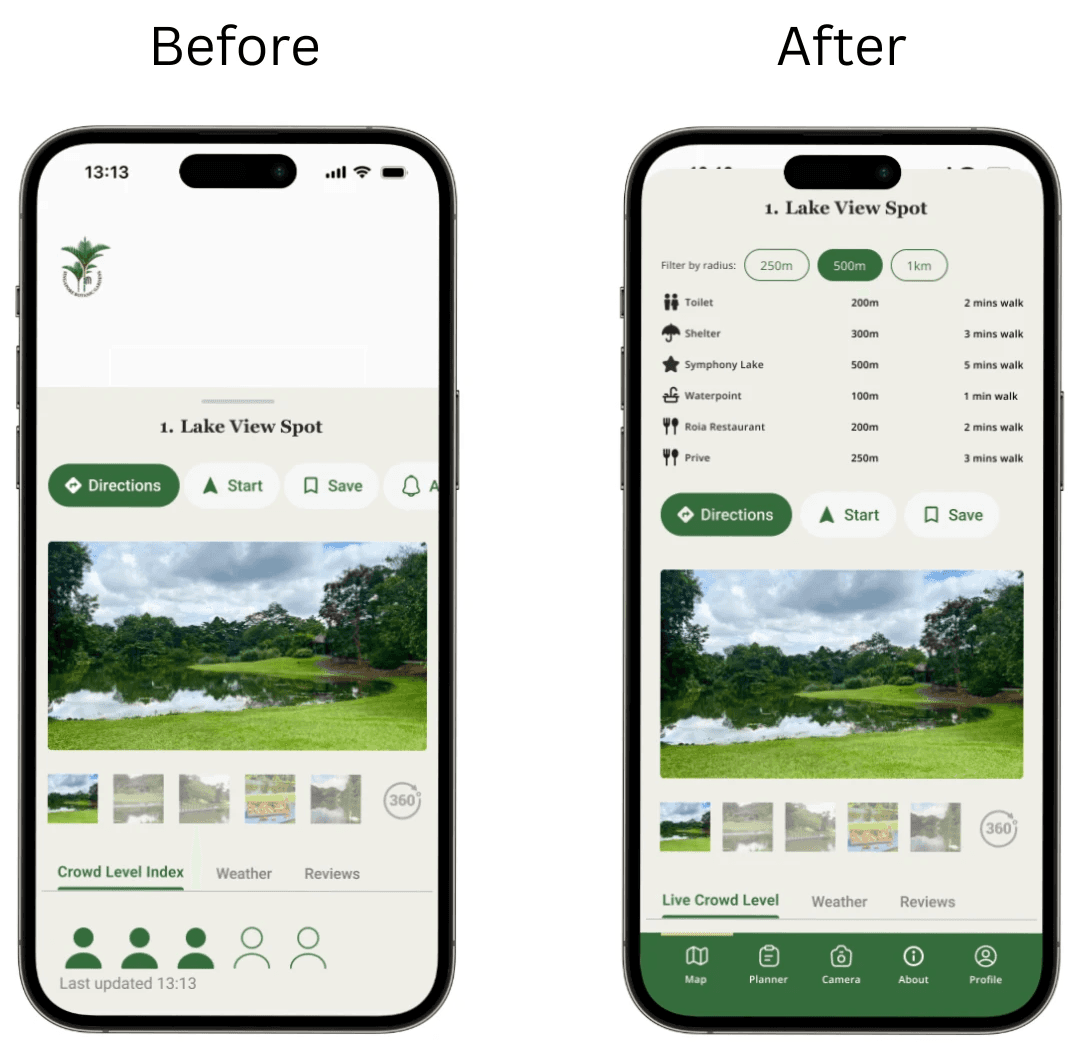
Interactive Discovery Map Iterations
Users prefer straightforward activity selection followed by relevant spot recommendations based on their choices.
"There are too many filtering options. Separating activities and amenities would be better."
Visitors want visibility into activities and their proximity to amenities before making a decision.
"I just want to see the available spots and nearby amenities without narrowing my options with filters."
During our final pitch, representatives from the Gardens’ Festivals, Events & Exhibitions and Visitor Management & Security teams responded positively:
All features aligned with their strategic goals around engagement, education, and repeat visitation
They expressed interest in piloting the Itinerary Planner, which they viewed as the most feasible and impactful feature to implement first
takeaways.
Early validation helped us invalidate our original assumptions and pivot toward a more meaningful opportunity before investing significant resources. Rather than focusing solely on convenience, we designed for both delight and utility, creating moments of joy and learning that made our solution truly compelling. Most importantly, we learned to bridge user value with business goals, ensuring our final concept served both user needs and organizational objectives - a critical product-thinking mindset for sustainable design solutions.
testimonial.
Great insights from your team on the ground - they echoed what we've been hearing too.
I really liked the three features, and we’ve actually been considering starting with the itinerary planner on our website.

Dennis Lim
Coordinating Director, Festivals, Events & Exhibitions and Visitor Management & Security, Singapore Botanic Gardens